
Blue Green and Other Algae
Charleston Lake has had some short blooms of Blue-Green algae in the last couple of years. Webster Bay had one small bloom in September that lasted a few days. It was tested and confirmed to be Blue-Green. These blooms are toxic. People should not swim near them, animals should not drink water near them, and people should not source their drinking water supply from the immediate area. It is important to learn to identify it and be cautious. The Blue-Green algae is most notable in the matted form, but can also present itself as a scum or paint. It most often occurs in the fall in our lake type, in warm, calm water near the shores.
Charleston Lake is an oligotrophic lake and not considered a high nutrient lake, so in the past the blue-green blooms have been very infrequent. The recent increase in frequency is not just happening in our lake but is occurring more frequently in many similar lakes in Ontario. High phosphorous levels in the past have been thought to be the major cause. Phosphorous is still a big driver, but levels in our lake have been down from what they were 25 years ago. Scientist wrestling with this issue have started to look at some of the climate change affects. Higher water temperatures, generally calmer waters, shorter ice cover, and more intense storms with higher runoff are all things they think are contributing to the increase. This year the ice went out in early March, earlier than anyone can remember. It was only covering the lake for about 7 weeks, not the normal 3 or 4 months. Water temperatures were higher than usual from May to Oct.
What can we do knowing that climate change is unlikely to slow down anytime soon. The biggest thing we can do is focus on the nutrient loading and try to keep the phosphorous levels down. That means not fertilizing near the water or where runoff is likely to occur. It means improving our waterfront with natural plants so that runoff is better filtered. It means making sure our septic systems are in good working order. It means using no or low phosphate products where we can. Unfortunately, it also means learning to identify blue-green algae and take precautions when it is present. Fortunately, at this time in our lake the blooms are generally in the fall and of short duration. They break up with water agitation mostly from wind and weather changes.
There are some other algae that look a little bit similar to Blue-Green algae. In the last 15 years there has been more green filamentous algae that has bright green and sometimes bluish colour. This is a floating, fibrous, sometimes cloud-like algae that can be quite annoying but is not toxic on its own. In the matted, surface form it can accumulate some of the bacteria from other algae that in rare cases make it toxic. With the increased water clarity and temperatures in the last few years filamentous has become more frequent. The presence of Zebra mussels is an additional factor promoting its growth. These mussels tend to concentrate nutrients from open waters to the shore areas where the filamentous algae blooms occur. Best to avoid the matted surface versions. Also not to be confused with Blue-Green is the yellow-green pollen that occurs most heavily in the spring.
This summer the lake also experienced longer and more frequent periods of suspended particles in the water column. In September some open-water surface samples were tested and found to contain a number of different types of algae, none of which were deemed toxic or harmful to humans. It is suspected that the long periods of lake stratification and warmer waters and the intense storm runoff contributed to the increase in algae and particles.
There are some articles on our web site with pictures to help understand Blue-Green algae. Ontario has a site that addresses Blue-Green algae www.ontario.ca/page/blue-green-algae . including an on-line and hot-line number to report Blue-Green Algae. MOECP then confirms the presence and notifies the local health unit. The health unit decides whether or not the situation requires public notification and/or response. Please be aware and be cautious.
John Willson – with help from many sources
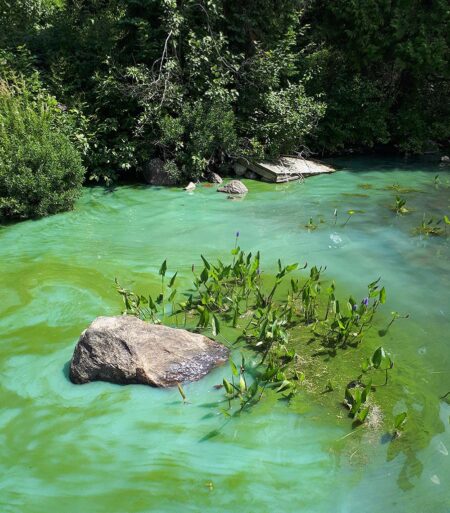
Blue Green Algae Bloom
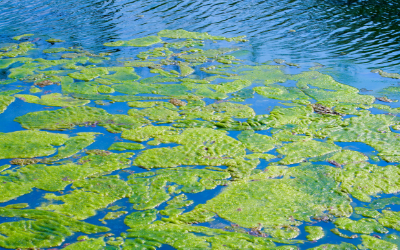
Blue Green Algae Bloom
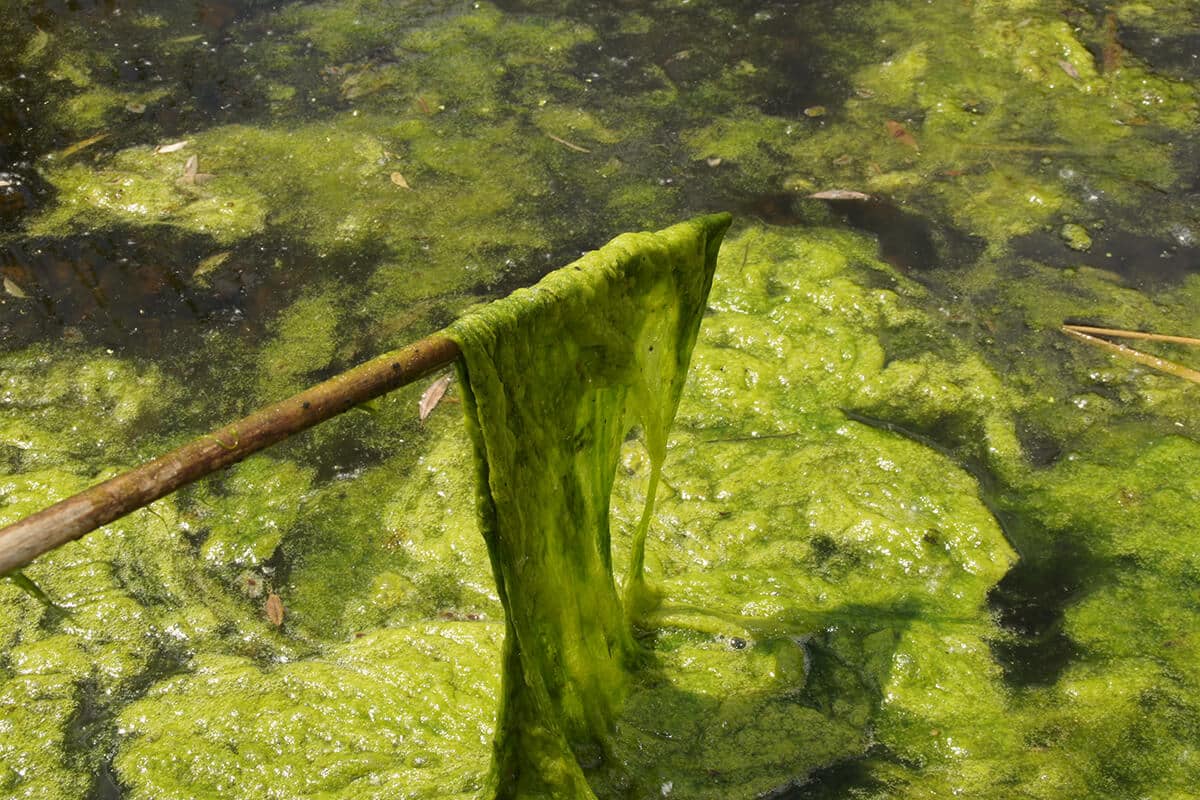
Green Filamentous Algae Bloom