
Our Lake The land, the lake and the ecosystem
Geography and Ecology Around Charleston Lake
Charleston Lake is almost central to an hourglass shaped landform called the Frontenac Arch. This ancient landform is a wildlife corridor of Continental significance – a natural bridge from the Canadian Shield to the Adirondack Mountains and further south. Graced with rich forests and wetlands, Charleston Lake contributes significantly to this continental-scale corridor and is at the heart of the UNESCO Frontenac Arch Biosphere – one of only 18 Biosphere Reserves in Canada.
Charleston Lake’s climate is moderated by the Great lakes, and along with a broad range of soil and rock types and chemistries, a diverse topography of hills, cliffs and valleys, and a range of land uses creates a landscape that hosts an amazingly rich ecology. Here, five forest regions of North America converge with many pecies at risk finding vital refuge in these habitats.
The lake’s cradling basin has the distinction of being two distinct bedrock types: granite and sandstone. For the most part, it lies in glacier gouged 1.5 billion-year-old granites. The north east portion is on a sandstones and limestones that are 1 billion years younger. Shaped by its geology and myriad of habitats, Charleston Lake’s richness of ecological attributes contributes to the health and well-being of the entire region.
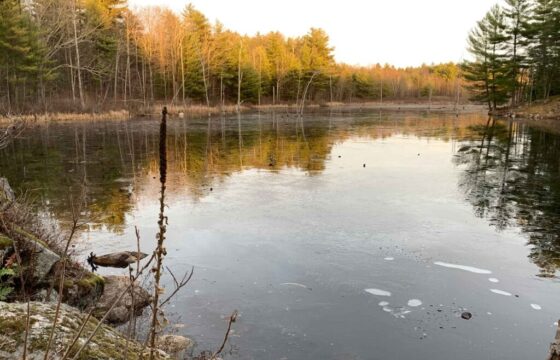
There are many interesting places to visit on and around Charleston lake
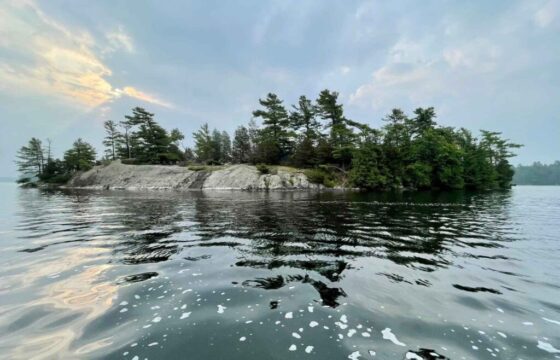
Photo Credit: Chris Kanters
Trees Around Charleston Lake
In addition to beautifully framing Charleston Lake at sunset, the trees around the lake enhance the health of the environment in a number of ways. Trees help stabilize banks, absorb excess nutrients that feed algae blooms, prevent erosion by slowing down rainfall, and reduce air pollution. They also filter out pesticides and provide shade, privacy for humans, and habitat for wildlife.
Charleston Lake is located in an area where the rich deciduous forests of the Eastern USA meets Canada’s Northern Boreal forests. Because of this, we are very fortunate to enjoy wide diversity of tree species around the lake. The varied topographical and soil of the lake, from rocky ridges to lower bottomlands, sedges and marshes, also creates varied habitat for shrubs, ferns, wildflowers, insects, reptiles, amphibians and mammals, which are all interdependent parts of a broader ecosystem.
The predominant native deciduous species include Sugar Maple, Beech, Paper Birch, Red Oak and White Pine. Basswood, Red Maple, White Ash, Shagbark Hickory, White Oak, Red Pine and Hophornbeam (Aka Ironwood) are quite abundant as well. Although not as common, Black Maple, Silver Maple, Manitoba Maple, Oak, Blue Beech, Poplar, Eastern Cottonwood, and Black Walnut can also be found scattered around the lake.
Among coniferous species can be found White Pine, Red Pine, Hemlock, Red Spruce, Balsam Fir, and Eastern White Cedar and Eastern Red Cedar. The three-needled Pitch Pine is only found in Canada around Charleston Lake and the 1000 Island area.
Wildlife Around Charleston Lake
Birds
The woodland area surrounding the lake is habitat for a large variety of woodland birds, and the lake itself is a healthy home for many waterfowl. Loons have been showing encouraging signs of breeding successfully and bolunteers tally the number of loons and chicks living on the lake each season, as well as provide help with nesting locations. There are Mergansers and many other types of ducks, as well as Canada Geese and occasionally, flocks of trumpeter swans. Herons are plentiful all over the lake and you will see many standing in the water or on docks and rocky outcrops. The lake also has a number of Peregrine Falcons, Osprey and Bald Eagles. Owls are often seen at dusk in some areas.
Loons of Charleston Lake
Loons of Charleston Lake
Loons of Charleston Lake
Charleston Lake is know for its common loons. Since 2024, CLA engaged wildlife photographer Joshua Burch to equip our loon nesting rafts with remote cameras. This has allowed us to observe a loon family through its seasonal cycle. Check out the video footage from previous years.
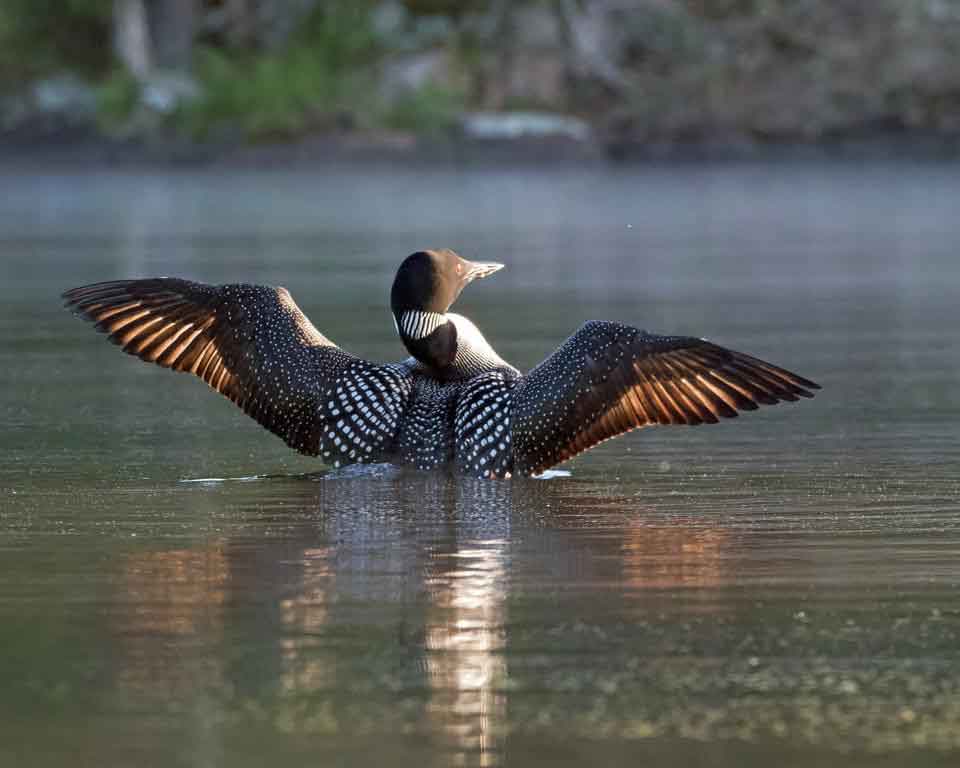
Photo Credit: Chris Kanters
Mammals
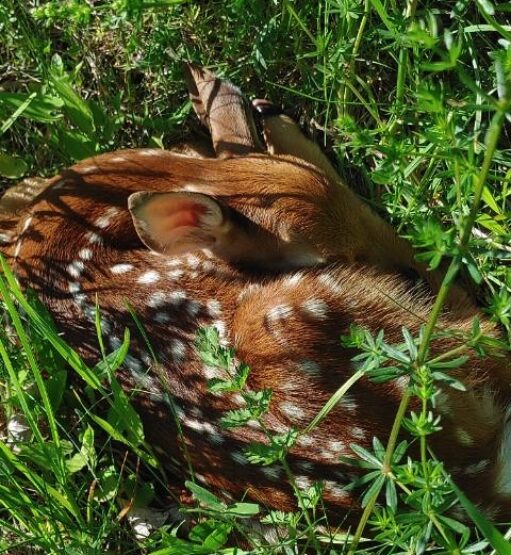
Among the many types of mammals: deer, coyotes, foxes, and smaller creatures such as porcupines, raccoons, and skunks can be spotted around the lake. Beavers, otters, muskrats, and mink are found in and around the water. Black bears are rare in the area, but can be seen from time-to-time.
Turtles
In and around Charleston Lake there are five species of turtles. They are Common snapping, Blanding’s, Midland painted, Northern map and Eastern musk turtle. With the exception of the Midland painted turtle, all of our turtles in Ontario are considered by the Province to be at risk, ranging from endangered to special concern. The painted turtle is assessed at the federal level as special concern.

Photo Credit: Brenda Evers
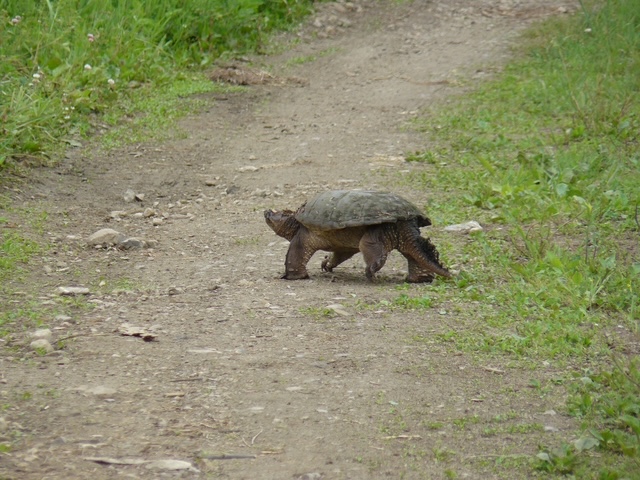
Snapping turtle crossing road
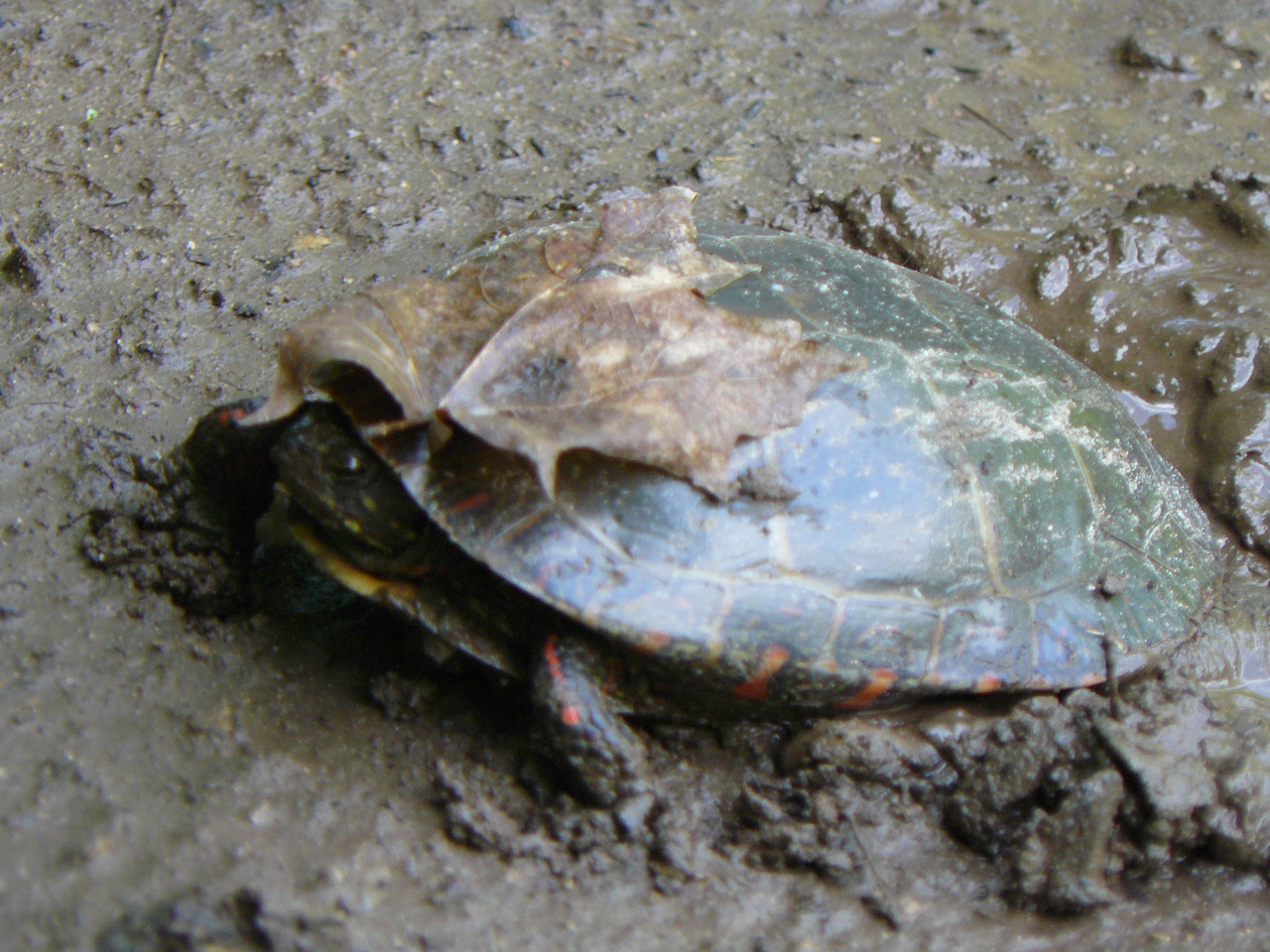
Painted turtle laying eggs
Fish
Charleston Lake holds a mixed warm-and cold-water fishery, with both native lake trout and largemouth bass and smallmouth bass being the most sought-after species. Other species that can be found are: Northern Pike, Rock Bass, Yellow Perch, Pumpkinseed, Bluegill, Bowfin, Black Crappie, Brown Bullhead, Common Carp, Burbot, Lake Whitefish and Brook Trout.
Charleston Lake is in the MNR Fisheries Management Zone 18.
Please fish responsibility
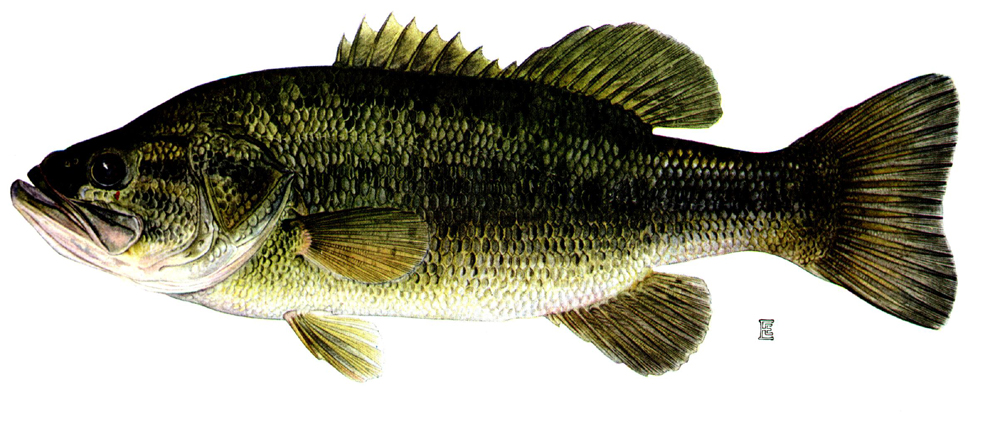
Invasive / Undesirable Species Found at Charleston Lake
Zebra Muscles
Zebra mussels are an invasive species that has spread throughout the great lakes and most inland lakes in Ontario. These mussels cause damage to the lake ecosystem plus their sharp shells can easily cut bare feet. To further reduce the risk of introducing additional mussels to the lakes, boats, fishing gear, and other recreational equipment entering from a different water body should always be cleaned and inspected before entering the lake.

Water Soldier
Water Soldier is an invasive aquatic perennial plant. Red Horse Lake, an adjacent lake to Charleston Lake, does have water soldier and an intensive project by MNR to erradicate water solider was conducted in 2024. As part of this project, the team also assessed Charleston Lake and determined we do not have water solider.

Filamentous Green Algae
Filamentous Green algae are unicellular or multicellular and may form filaments that range fromseveral millimetres to a metre in length. They can be found free-floating in shallow water on the bottom near shore or attached to submerged objects like rocks. They are typically green in colour, but can vary in shade depending on age and nutrient content. Some species form colonies that appear as cottony clumps, while others form theady, sikly, slippery masses that are slimy to the touch.
Blooms usually occur in the spring after heavy runoff or in the summer following hot spells and may appear as clumps or dense mats that float on or just beneath the surface of the water. Blooms can be a nuisance as they may produce a grassy or unpleasant ordor and/or impede recreational activities.
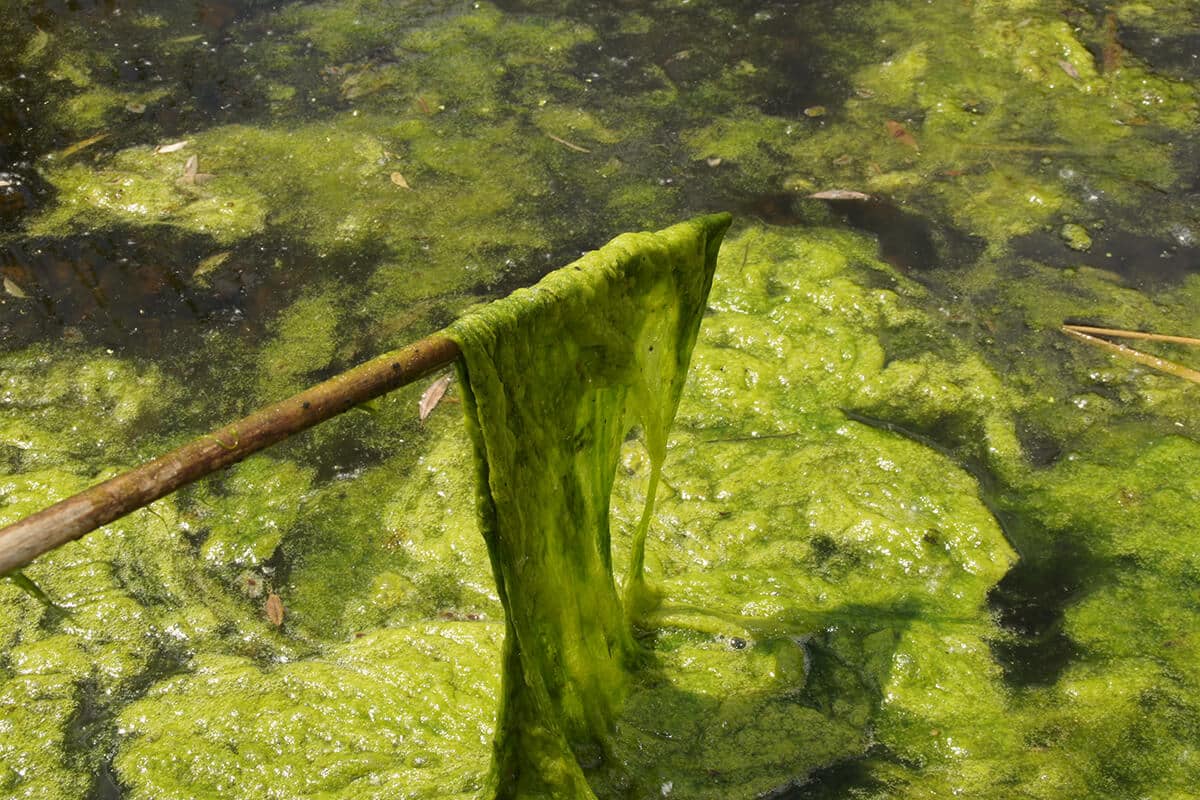
Filamentous Green Algae
Blue Green Algae (Cyanobacteria)
Blue-green algae, also known as Cyanobacteria, are microscopic, plant-like organisms that occur naturally in lakes. Blue green algae thrives in areas where the water is shallow, slow moving and warm but may also be present in deeper, cooler water.
Populations of blue green algae can rapidly increase to form a large mass or scum, called a bloom. Blooms are most common in late summer or early fall but can also ocur in other seasons. Bloom development can be promoted by conditions such as: calm water, high temperatures and increase in nutrients such as phosphorus.
Blooms typically look like pea soup or spilt paint with a bluish or greenish colour. Fresh blooms often smell like freshly mowed grass, while older blooms may smell like rotting garbage.


Blue Green Algae
Blue Green Algae and Other Algae (article from Charleston Lake Newsletter)
Charleston Lake has had some short blooms of Blue-Green algae in the last couple of years. Webster Bay had one small bloom in September that lasted a few days. It was tested and confirmed to be Blue-Green. These blooms are toxic. People should not swim near them, animals should not drink water near them, and people should not source their drinking water supply from the immediate area. It is important to learn to identify it and be cautious. The Blue-Green algae is most notable in the matted form, but can also present itself as a scum or paint. It most often occurs in the fall in our lake type, in warm, calm water near the shores.
Charleston Lake is an oligotrophic lake and not considered a high nutrient lake, so in the past the blue-green blooms have been very infrequent. The recent increase in frequency is not just happening in our lake but is occurring more frequently in many similar lakes in Ontario. High phosphorous levels in the past have been thought to be the major cause. Phosphorous is still a big driver, but levels in our lake have been down from what they were 25 years ago. Scientist wrestling with this issue have started to look at some of the climate change affects. Higher water temperatures, generally calmer waters, shorter ice cover, and more intense storms with higher runoff are all things they think are contributing to the increase. This year the ice went out in early March, earlier than anyone can remember. It was only covering the lake for about 7 weeks, not the normal 3 or 4 months. Water temperatures were higher than usual from May to Oct.
What can we do knowing that climate change is unlikely to slow down anytime soon. The biggest thing we can do is focus on the nutrient loading and try to keep the phosphorous levels down. That means not fertilizing near the water or where runoff is likely to occur. It means improving our waterfront with natural plants so that runoff is better filtered. It means making sure our septic systems are in good working order. It means using no or low phosphate products where we can. Unfortunately, it also means learning to identify blue-green algae and take precautions when it is present. Fortunately, at this time in our lake the blooms are generally in the fall and of short duration. They break up with water agitation mostly from wind and weather changes.
There are some other algae that look a little bit similar to Blue-Green algae. In the last 15 years there has been more green filamentous algae that has bright green and sometimes bluish colour. This is a floating, fibrous, sometimes cloud-like algae that can be quite annoying but is not toxic on its own. In the matted, surface form it can accumulate some of the bacteria from other algae that in rare cases make it toxic. With the increased water clarity and temperatures in the last few years filamentous has become more frequent. The presence of Zebra mussels is an additional factor promoting its growth. These mussels tend to concentrate nutrients from open waters to the shore areas where the filamentous algae blooms occur. Best to avoid the matted surface versions. Also not to be confused with Blue-Green is the yellow-green pollen that occurs most heavily in the spring.
This summer the lake also experienced longer and more frequent periods of suspended particles in the water column. In September some open-water surface samples were tested and found to contain a number of different types of algae, none of which were deemed toxic or harmful to humans. It is suspected that the long periods of lake stratification and warmer waters and the intense storm runoff contributed to the increase in algae and particles.
There are some articles on our web site with pictures to help understand Blue-Green algae. Ontario has a site that addresses Blue-Green algae https://www.ontario.ca/page/blue-green-algae . including an on-line and hot-line number to report Blue-Green Algae. MOECP then confirms the presence and notifies the local health unit. The health unit decides whether or not the situation requires public notification and/or response. Please be aware and be cautious.
John Willson – with help from many sources