While you are boating on the lake this spring and summer near sheltered areas, you may notice a floating mass with a cedar base and a mass of grasses and compost on top. It is likely a loon nesting raft which has been designed and built to help loons meet the challenges during their vulnerable nesting period.
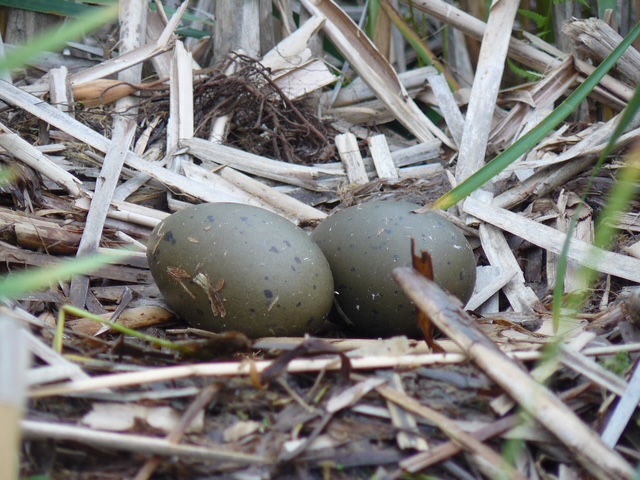
Loons usually return to the lake as soon as the ice is out. The male locates a suitable nesting site in shallow, sheltered areas of the lake. Typically, only one or two eggs are laid in the nest. Both parents share the incubation with hatching taking place within 30 days. It is within this period where the loss is potentially the greatest with egg predators, high winds or high water levels taking their toll. If there is too much disturbance around the nesting area due to boat traffic or nearby construction, the adults may abandon the nest.
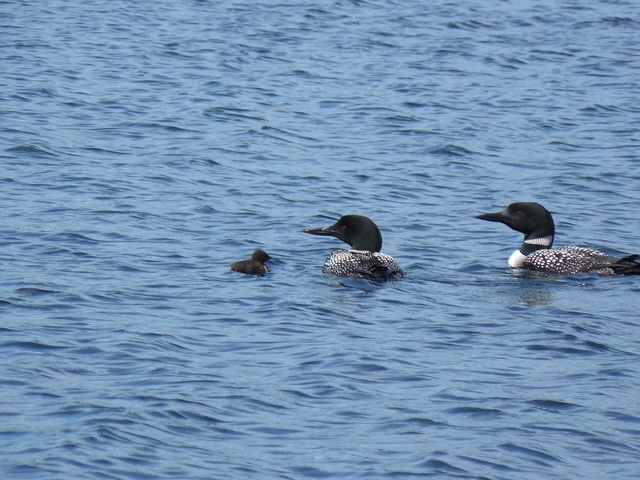
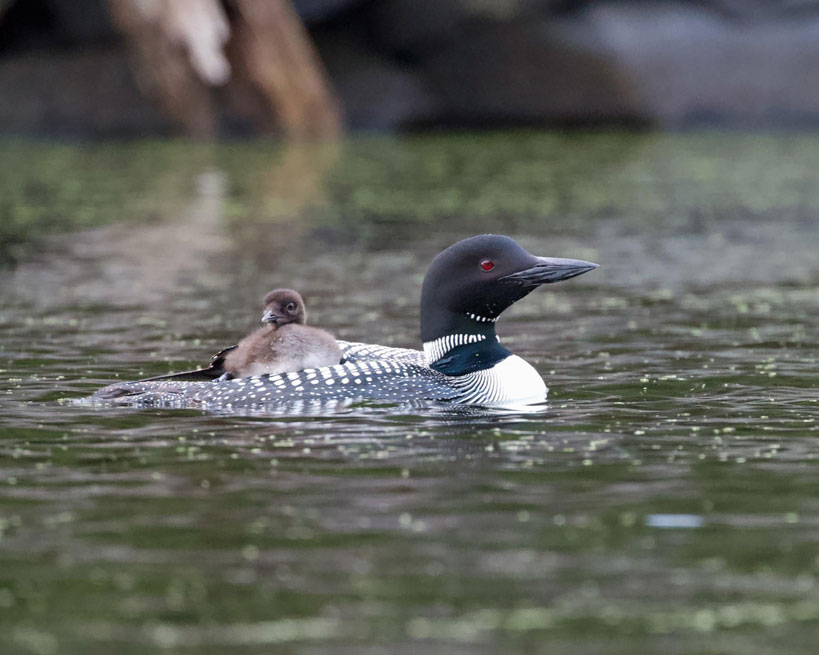
Upon hatching, the chicks leave the nest within a day or two, spend a good deal of thime on their parent’s backs. For the first eight weeks, they are fed by their parents before being left to their own devices. If they were lucky enough to survive natural predators including large fish, the next hazard they face is boat props during the busy summer seadon. If boats get too close, adults will try to fend them off but will eventually dive while the chicks are not as adept. this leavves the chicks prone to the risk of dying from hyperthermia as the adults are not there to carry them out of the water and on thier backs. So please keep a safe distance when you are boating.
While loons are agile swimmers and divers, they are relatively awkward on foot. As a result, they tend to nest in sheltered areas near the shoreline, where they can more readily access the nest from the water. Natural loon nests are vulnerable to unstable or high water levels that can submerge nests leaving the eggs inaccessible to the adults. Nests that float can rise and fall with water levels whether that level has been created by nature in the form of high levles of precipitation or man-made in the form of wakes from boats etc Nest rafts can also provide more options to adult loons if they are displaced by shoreline development or increased boat traffic in formerly sheltered natural sites. They can also provide safer sites for nesting against natural predators like otters and more likely racoons whose populations have increased along with the availability of human refuse.
Dwayne Struthers, a CLA Board Member and Jeff Rodderick have built and maintained 7 loon rafts. The loon rafts are made of three rows of natural 4x4yellow cedar lunber, connected like a mini log structure. Between the first and second layers,they place wire mesh to contain sheets of foam for floatation. On the top side, they place a layer of sods and compost on which the loons create their nest. Loosely anchored, these nests can withstand unstable water levels and a certaiin amount of boat wake.
If you happen to notice one of these loon rafts as you are boating, please keep a reasonable distance during the important nesting period. Remember we are all stewards of this beautiful natural treasure called Charleston Lake.